Before committing to full-scale production, manufacturers face a familiar challenge: proving that a design will perform as intended in real-world conditions.
Drawings and simulations offer insight, but they rarely reveal every manufacturing or functional issue. This is where prototype injection molding becomes a critical step in modern product development.
By producing small batches of parts using production-grade materials and molding processes, teams can validate design intent, assess part performance, and uncover risks early.
Prototype injection molding helps bridge the gap between concept validation and mass manufacturing, enabling faster decisions, fewer revisions, and a more confident path to launch.
Key Takeaways
Unlike 3D printing, prototype injection-molded parts utilize production-grade resins, allowing for accurate testing of mechanical, thermal, and chemical properties.
Prototype plastic molding is the most economical choice for quantities between 100 and 2,000 units, offering a lower cost-per-part than CNC machining or additive manufacturing.
An injection mold prototype serves as bridge tooling, enabling early market entry while the multi-cavity hardened steel production tool is being fabricated.
The injection molding process prototype phase identifies critical manufacturing defects like sink marks, warpage, and flash that might not be visible in earlier prototyping stages.
For industries like medical and aerospace, injection molded prototypes are often required for clinical trials or flight certifications to prove the process is repeatable and stable.
Establishing a clear understanding of the methodology is essential before diving into the specific tooling and design requirements.
What is Prototype Injection Molding?
Prototype injection molding is a manufacturing process used to produce functional plastic parts in low-to-medium volumes by injecting molten resin into a specialized prototype mold.
While traditional injection molding focuses on millions of cycles and maximum tool longevity, prototyping injection tooling is engineered for speed and cost-effectiveness.
The objective is to obtain parts that look, feel, and perform exactly like production units without the six-figure investment and three-month lead time associated with Class 101 production molds.
The injection molding prototype process typically utilizes single-cavity tools. In 2026, the integration of AI-driven toolpath generation has reduced the lead time for these prototype injection molds to as little as 5 to 10 business days.
This speed is critical for iterative design, where a team may need to test three different geometries of a prototype plastic mold in a single month to optimize a snap-fit or a living hinge.
For a deeper look into our engineering capabilities and the experts who manage these complex simulations, visit Our Team page.
Once the fundamental concept is understood, it is vital to evaluate the specific benefits that this process provides over other rapid manufacturing methods.
Suggested Read: Comparing 3D Printing and Injection Molding for Prototypes
Why You Need a Prototype Injection Molding Service
In 2026, the US manufacturing market is increasingly focused on risk reduction. Relying on a prototype plastic injection molding approach provides several strategic advantages that 3D printing or CNC machining cannot replicate.
Testing Functional Material Properties
Many engineering-grade plastics, such as glass-filled Nylon or high-temperature PEEK, exhibit anisotropic properties based on how the fibers align during the flow.
A prototype injection molded part is the only way to accurately test how these materials will behave under stress. This is particularly important for structural components in the automotive and aerospace sectors.
High-Fidelity Surface Finishes
Injection molded prototypes can be textured to meet SPI (Society of the Plastics Industry) standards. Whether you require a high-gloss finish (SPI-A2) or a heavy bead blast (SPI-T2), plastic prototype molding allows you to verify the aesthetic appeal and tactile feel of the part before committing to production.
Evaluating Tooling Feasibility
An injection mold prototype forces designers to address manufacturing constraints early. Features like draft angles, parting lines, and ejector pin locations must be considered.
By solving these issues during the injection molding prototypes phase, you avoid the massive costs of modifying a hardened steel tool later.
Bridge Tooling for Early Revenue
Many startups use prototype injection molding services to produce the first 1,000 units for market testing or early adopters. This allows the company to generate revenue and gather user feedback while the high-volume production line is being set up.
The strategic benefits are clear, but achieving these results requires a disciplined approach to the manufacturing workflow.
The Injection Molding Process Prototype: Step-by-Step
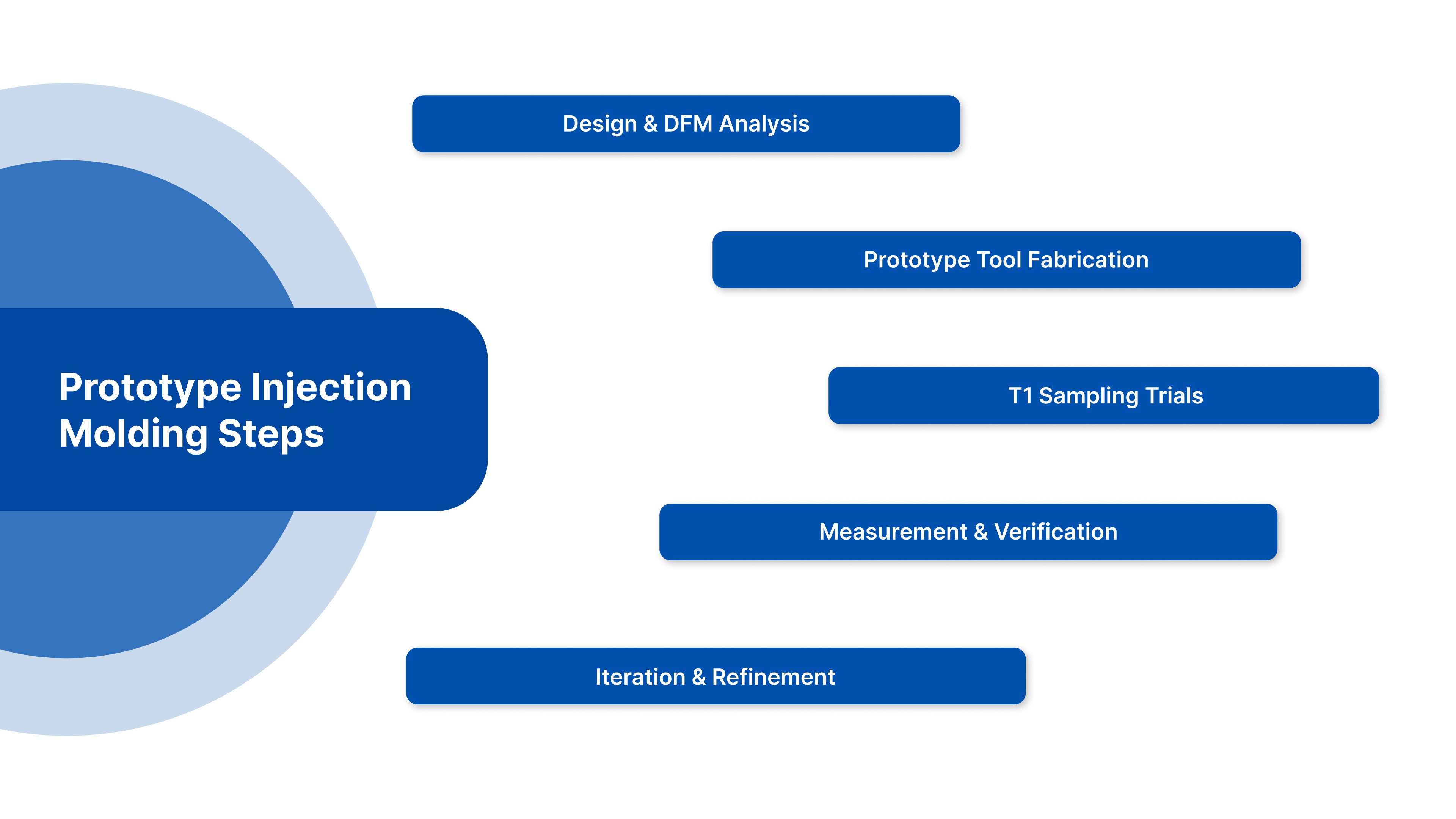
The journey from a CAD file to a finished plastic molding prototype involves several critical phases. Understanding this workflow ensures that expectations for lead time and quality are met.
Phase 1: Design and DFM Analysis
The process begins with the submission of a 3D model. Any reputable injection molding rapid prototyping services provider will conduct a thorough Design for Manufacturing (DFM) analysis.
This involves checking for uniform wall thickness, sufficient draft, and potential air traps. In 2026, many providers will use automated mold injected prototyping services software to provide real-time feedback on your design.
Phase 2: Prototyping Injection Tooling Fabrication
Unlike production tools, prototype injection molds are often made from high-strength aluminum alloys like 7075-T6 or pre-hardened soft steels like P20. These materials are easier to machine, reducing the time required for CNC milling and EDM (Electrical Discharge Machining).
Phase 3: Mold Sampling and T1 Trials
Once the prototype injection mold is assembled, it is loaded into an injection molding press for the first trial (T1). The machine settings, such as injection pressure, melt temperature, and hold time, are adjusted to produce the first batch of injection molding prototypes.
Phase 4: Measurement and Verification
The first shots are measured against the original CAD specifications. In the medical and aerospace industries, this may involve 3D laser scanning or CMM (Coordinate Measuring Machine) inspections to ensure the injection molded prototypes meet the required tolerances.
Phase 5: Iteration and Refinement
If the prototype molded parts show defects like warpage or sink, the tool can be modified. Because prototype injection molds are made of softer materials, they can be reworked much faster than production tools.
This iterative flexibility is the core strength of injection mold prototyping.
The success of these steps is heavily dependent on the materials chosen for both the tool and the part.
View Our Portfolio: High-Precision Molded Parts Gallery
Tooling Options for Injection Mold Prototyping
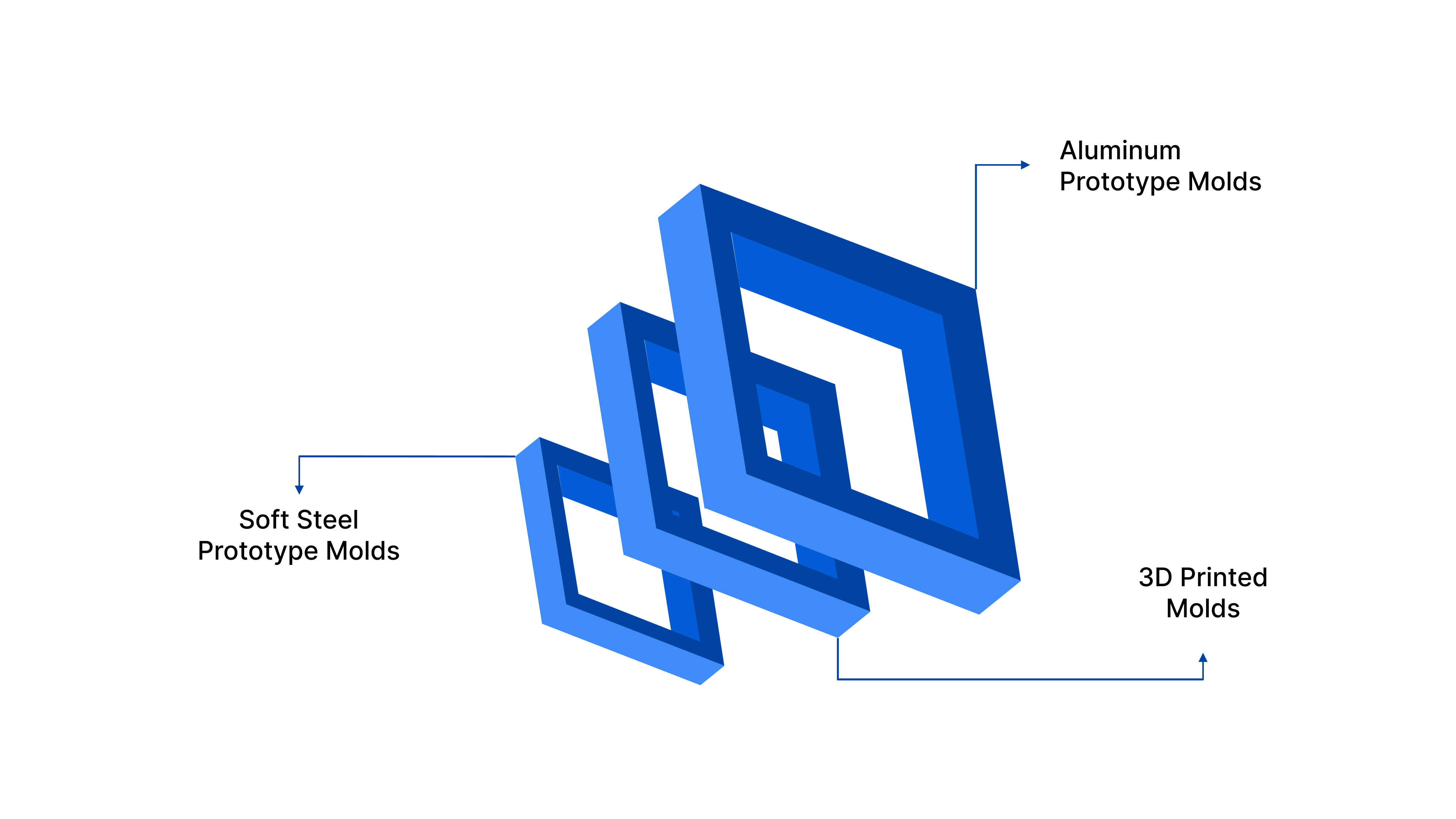
Choosing the right material for your prototype mold is a balance between part quantity, material abrasiveness, and budget. There are three primary categories of prototype injection molds used in the industry today.
1. Aluminum Prototype Molds
Aluminum is the gold standard for rapid injection mold prototyping. Its high thermal conductivity allows for faster cooling cycles, often reducing production time by 30%.
Best for: Quantities up to 5,000; non-abrasive resins like ABS, PP, and PE.
Pros: Lowest cost, fastest lead time (1-2 weeks), excellent heat dissipation.
Cons: Not suitable for glass-filled or abrasive materials; prone to wear on parting lines.
2. Soft Steel (P20 or NAK80) Molds
Soft steel prototype injection molds offer a middle ground between aluminum and hardened steel. They are more durable than aluminum but still easier to machine than stainless steel.
Best for: Quantities up to 50,000; abrasive or high-temperature resins.
Pros: More robust, holds tighter tolerances over longer runs, easier to weld for modifications.
Cons: Slightly longer lead times (3-5 weeks), higher cost than aluminum.
3. 3D Printed Injection Molds
For extremely low volumes (1-50 parts), some injection molding prototyping services use 3D printed inserts made from high-temperature resins.
Best for: Design validation of very simple parts; non-functional mockups.
Pros: Extremely fast (48-72 hours), lowest entry cost.
Cons: Limited material compatibility, poor surface finish, very short tool life.
With the tooling material selected, the focus shifts to the design of the part itself to ensure it can be manufactured reliably.
Designing Injection Molding Prototypes: DFM Deep Dive
To get the most out of a prototype injection molding service, you must design your part with the molding process in mind. Failure to follow basic DFM rules will result in prototype molded parts that are out of tolerance or visually flawed.
Uniform Wall Thickness
Non-uniform walls lead to differential cooling, which is the primary cause of warpage and sink marks. For most injection molded prototypes, a wall thickness between 1.5mm and 3.0mm is ideal. If you must have thicker sections, consider coring them out to maintain a uniform profile.
Draft Angles for Easy Ejection
A prototype injection mold needs a way to release the part without damaging the surface. Draft is a slight taper applied to the vertical walls of the part.
Standard Draft: 1 to 2 degrees.
Textured Surfaces: 3 to 5 degrees.
Minimum Draft: 0.5 degrees (only for very shallow features).
Radii and Fillets
Sharp corners are stress concentrators and can impede the flow of plastic. Adding radii to internal and external corners improves the structural integrity of your prototype plastic molding and ensures the resin fills the cavity smoothly.
Managing Undercuts
An undercut is any feature that prevents the part from being pulled straight out of the mold. In prototype injection molds, these are often handled using hand-loaded inserts or simple side actions. While these features are possible, they increase the cost of your injection molding prototype.
The design is only half of the equation; the selection of the plastic resin defines the final performance of the prototype.
Selecting Materials for Prototype Plastic Injection Molding
In 2026, the variety of resins available for injection molding prototyping is vast. Your choice should be based on the environment in which the part will operate.
Commodity Resins
These are the most common materials used in plastic prototype molding. They are cost-effective and easy to process.
ABS (Acrylonitrile Butadiene Styrene): Excellent impact resistance and toughness. Used for enclosures and consumer goods.
Polypropylene (PP): High chemical resistance and flexibility. Ideal for living hinges and medical containers.
Polyethylene (PE): Durable and moisture-resistant. Common in packaging and industrial components.
Engineering-Grade Resins
For high-performance injection molding prototypes, these materials offer superior mechanical and thermal properties.
Polycarbonate (PC): Transparent and extremely durable. Used for lenses and protective equipment.
Nylon (Polyamide): High wear resistance and strength. Often reinforced with glass fibers for structural applications.
PEEK / PEI: High-temperature resins that can withstand extreme environments. Common in aerospace and medical implants.
Sustainable Materials in 2026
With new regulations like the US Extended Producer Responsibility (EPR) fees coming into effect, many companies are using prototype injection molding to test Post-Consumer Recycled (PCR) resins and bio-based polymers.
These materials often have different shrinkage rates and flow behaviors, making the injection molding process prototype phase essential for validating their use.
Selecting the right material is a technical challenge, but comparing the various prototyping methods is a financial one.
Common Questions: Material Compatibility FAQ
Injection Molding Rapid Prototyping Services: Comparing Methods
Before committing to prototype injection molding, many engineers consider 3D printing or CNC machining. Each method has a specific break-even point where it becomes the most logical choice.
3D Printing vs. Prototype Injection Molding
3D printing is excellent for "looks-like" models where you only need one or two units. However, it lacks the material integrity of injection molded prototypes. By the time you need 50 to 100 parts, the cost of 3D printing often exceeds the cost of a prototype injection mold.
CNC Machining vs. Prototype Injection Molding
CNC machining is highly accurate and can use production-grade materials. However, it is a subtractive process that cannot easily create internal hollows or complex thin-walled structures that are typical of plastic molding prototype designs.
For quantities over 25 units, prototype plastic injection molding is almost always more cost-effective.
Understanding the competitive landscape helps you choose the right partner for your project.
The Future: Best Injection Molding Prototyping Services in 2026
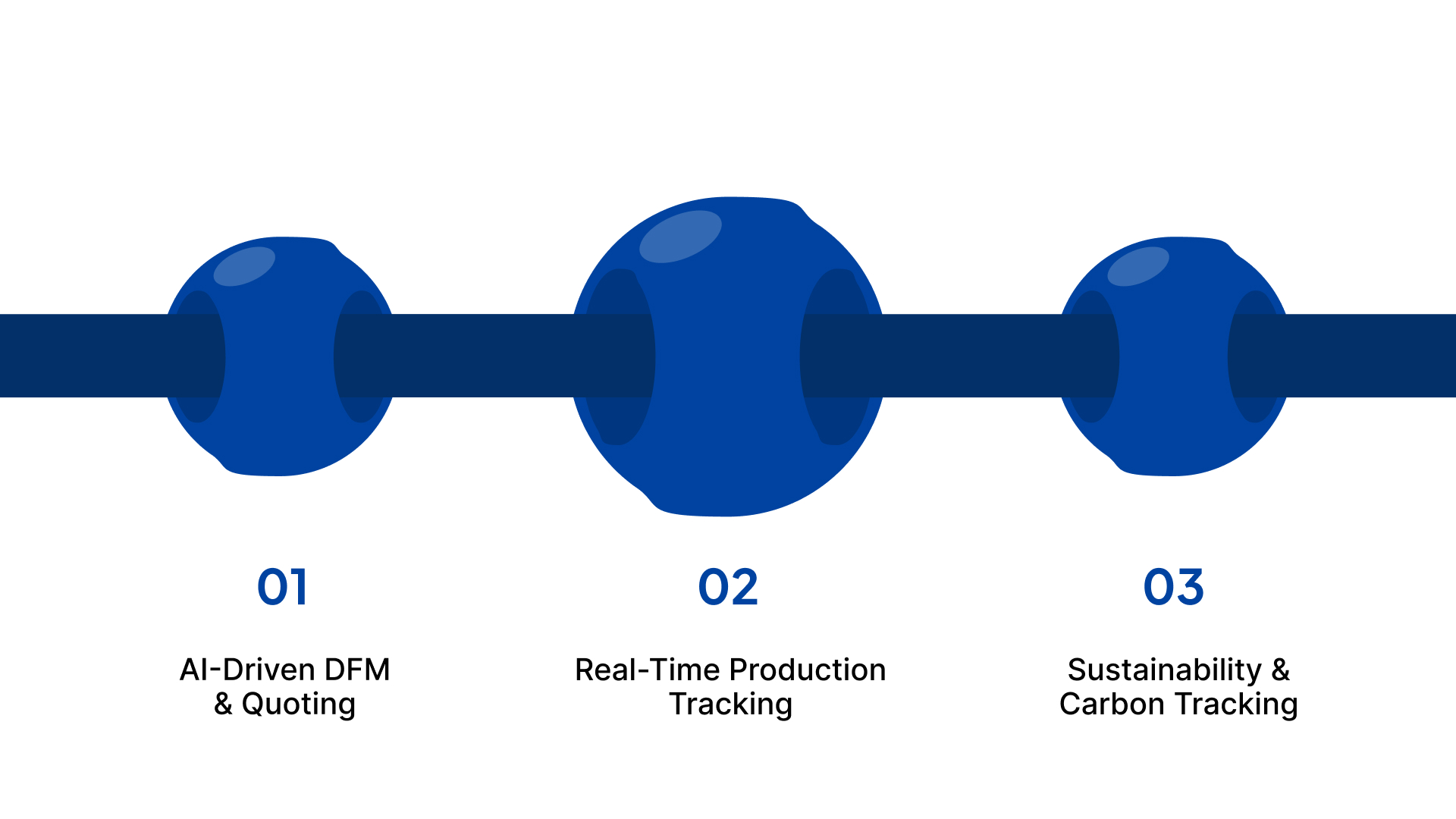
The best injection molding prototyping services today are distinguished by their digital integration. Companies like Evok Polymers are moving beyond simple manufacturing and into automated design consulting.
AI-Driven DFM and Quoting
In 2026, the best services for rapid injection mold prototyping use AI to analyze CAD files in seconds. These systems can predict where sink marks will occur and suggest changes to wall thickness before the user even submits a Request for Quote (RFQ).
Real-Time Production Tracking
Transparency is a core requirement for modern supply chains. Leading prototype injection molding providers now offer dashboards where clients can see the real-time status of their prototype injection molds, from the CNC milling stage to the final T1 sample shipment.
Sustainability and Carbon Tracking
As ESG (Environmental, Social, and Governance) reporting becomes mandatory for large firms, injection molding rapid prototyping services are providing data on the carbon footprint of each part.
This includes the energy used during the molding cycle and the recyclability of the prototype plastic molding material.
The technological advancements of 2026 make the process faster, but managing the budget remains a primary concern for project managers.
Managing Costs for Prototype Injection Molded Parts
The total cost of a prototype injection molding project is split into two parts: the tooling cost and the part cost.
Tooling Cost Drivers
The price of a prototype injection mold can range from $1,500 for a simple part to over $20,000 for a complex assembly. Key drivers include:
Geometry Complexity: Deep ribs, thin walls, and intricate details require more machine time.
Undercuts: Features that require side-actions or hand-loaded inserts increase the mold's complexity.
Surface Finish: Achieving a diamond-buffed mirror finish requires manual labor and increases the cost of the injection mold prototype.
Conclusion
Prototype injection molding remains the most powerful tool in the product developer's toolkit for achieving manufacturing certainty. In an era where speed and precision are non-negotiable, the ability to validate designs with production-grade materials and processes is a fundamental competitive advantage.
By leveraging prototype molds, companies can navigate the complex transition from a digital concept to a physical, market-ready product with minimal risk and maximum efficiency.
At Evok Polymers, we are committed to helping US innovators bring their visions to life through world-class injection molding prototyping services.
Our expertise in DFM, tooling engineering, and material science ensures that your injection molded prototypes are not just representative models, but functional components that drive your business forward.
Whether you are looking for a single prototype plastic mold or a comprehensive bridge-to-production strategy, our team is ready to support your project.
Would you like a professional DFM review of your current CAD design?
Contact Evok Polymers today to discuss your project requirements and receive a comprehensive quote for your next prototype injection molding project. Our engineers are ready to help you optimize your design for success.
Frequently Asked Questions (FAQs)
1. What is the typical lead time for a prototype injection molding service?
In 2026, a standard aluminum prototype injection mold can be fabricated in 10 to 15 business days. Once the tool is completed, the first shots (T1 samples) can be molded and shipped within 24 to 48 hours.
If you require expedited injection molding prototyping, some premium lanes can deliver parts in as little as 5 days.
2. How many parts can I get from a single prototype mold?
The lifespan of a prototype injection mold depends on the material. High-grade aluminum tools (7075-T6) typically yield between 2,500 and 10,000 cycles. If you use soft steel like P20, you can often reach 50,000 cycles.
For most design validation and bridge-to-production projects, these quantities are more than sufficient.
3. Can I use production-grade resins in my injection molding prototypes?
Yes. This is the primary reason to choose prototype injection molding over 3D printing. You can use almost any commercially available thermoplastic, including engineering grades with fillers like glass or carbon fiber.
This allows you to perform accurate mechanical, thermal, and chemical resistance testing.
4. What happens if I need to change the design after the mold is built?
One of the key benefits of injection mold prototyping is the ability to make "metal-safe" changes. If you need to remove material from the part (which means adding metal to the mold), it is a simple machining process.
If you need to add material to the part (removing metal from the mold), it is also straightforward. However, complex "non-metal-safe" changes may require welding or a new mold insert.
5. How does prototype injection molding help with medical device certification?
For FDA or ISO certifications, the regulatory bodies often require that testing be performed on parts made from the "final" manufacturing process.
Because prototype injection molded parts are made using the same pressures, temperatures, and resins as production parts, they are often accepted for clinical trials and validation studies.