Have you ever invested months into product development, only to find costly design flaws once manufacturing begins?
It’s a common pain point for manufacturers trying to move fast without breaking budgets. In fact, many researchers believe that nearly 80% of a product’s total manufacturing cost is determined during the design and development stage. That makes early validation important.
That’s where prototype tooling plays a decisive role by allowing teams to test form, fit, and function before committing to expensive production tooling. Instead of guessing, manufacturers can validate designs, reduce rework, and control costs early.
From startups to established OEMs, prototype tooling offers a practical cover between concept and full-scale production.
In this guide, you’ll learn what prototype tooling is, how the process works, its key benefits, and proven strategies to optimize costs without compromising quality.
Key Takeaways
Early tooling validation directly protects capital, preventing six-figure production tool changes caused by untested assumptions.
Cost optimization starts at the prototype stage, where design, material, and cycle-time tradeoffs remain flexible and affordable.
Production-ready thinking during prototyping shortens launch timelines, allowing validated designs to scale without delays or redesigns.
Prototype tooling exposes real-world failures early, catching tolerance, material, and flow issues before they trigger expensive production rework.
The right tooling partner turns prototypes into strategy, aligning engineering decisions with performance, manufacturability, and long-term unit economics.
What Is Prototype Tooling?
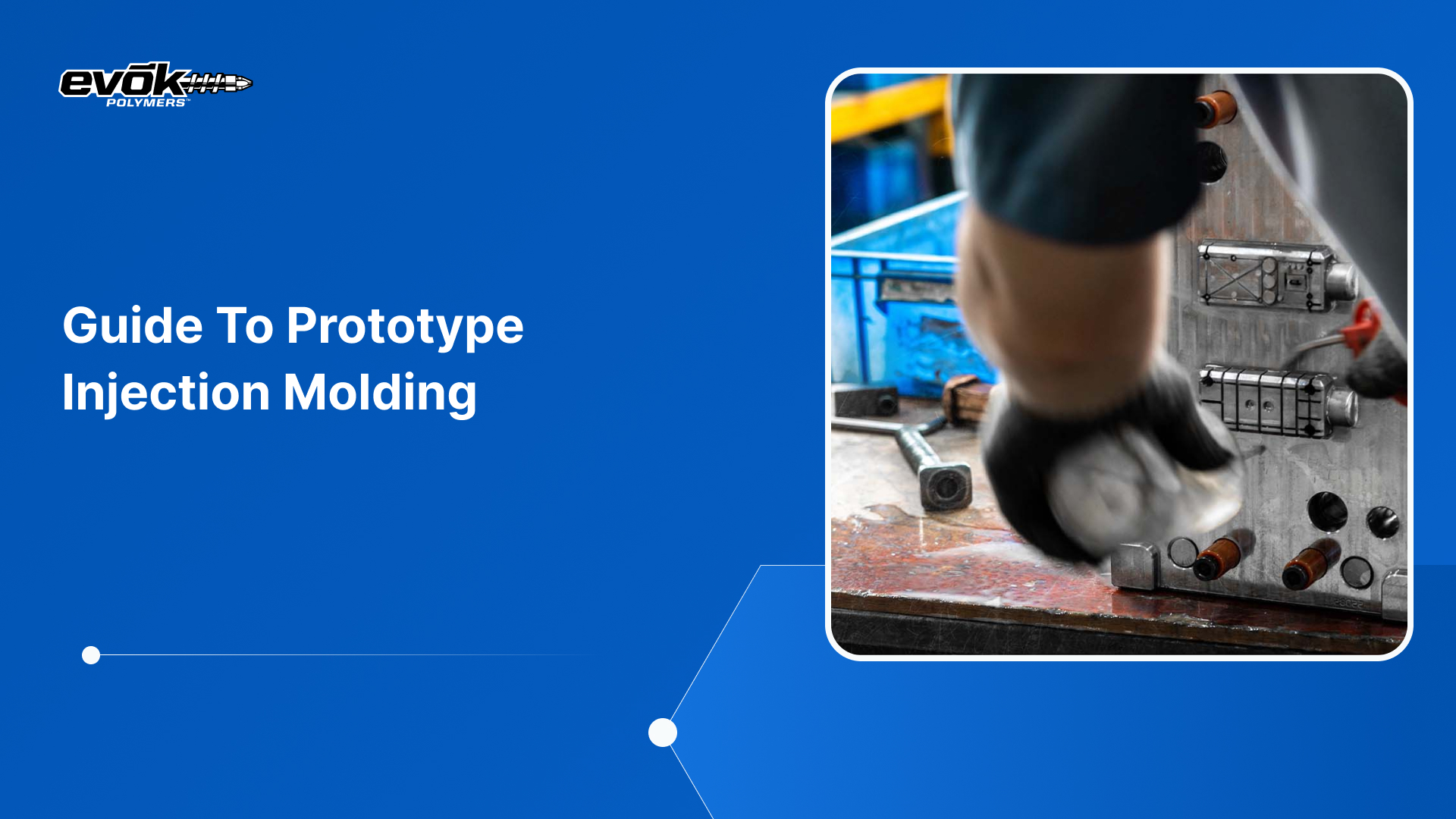
Prototype tooling refers to temporary or low-volume tooling used to create functional prototypes before full production begins. It replicates real manufacturing conditions without the long lead times or high costs of production molds.
This tooling approach allows engineers to evaluate part performance, tolerances, and assembly behavior using real materials. Unlike rapid prototyping alone, prototype tooling supports processes such as injection molding and CNC machining under near-production conditions.
Because prototype tooling sits between design and mass production, manufacturers rely on it to improve outcomes early.
Key Benefits of Prototype Tooling
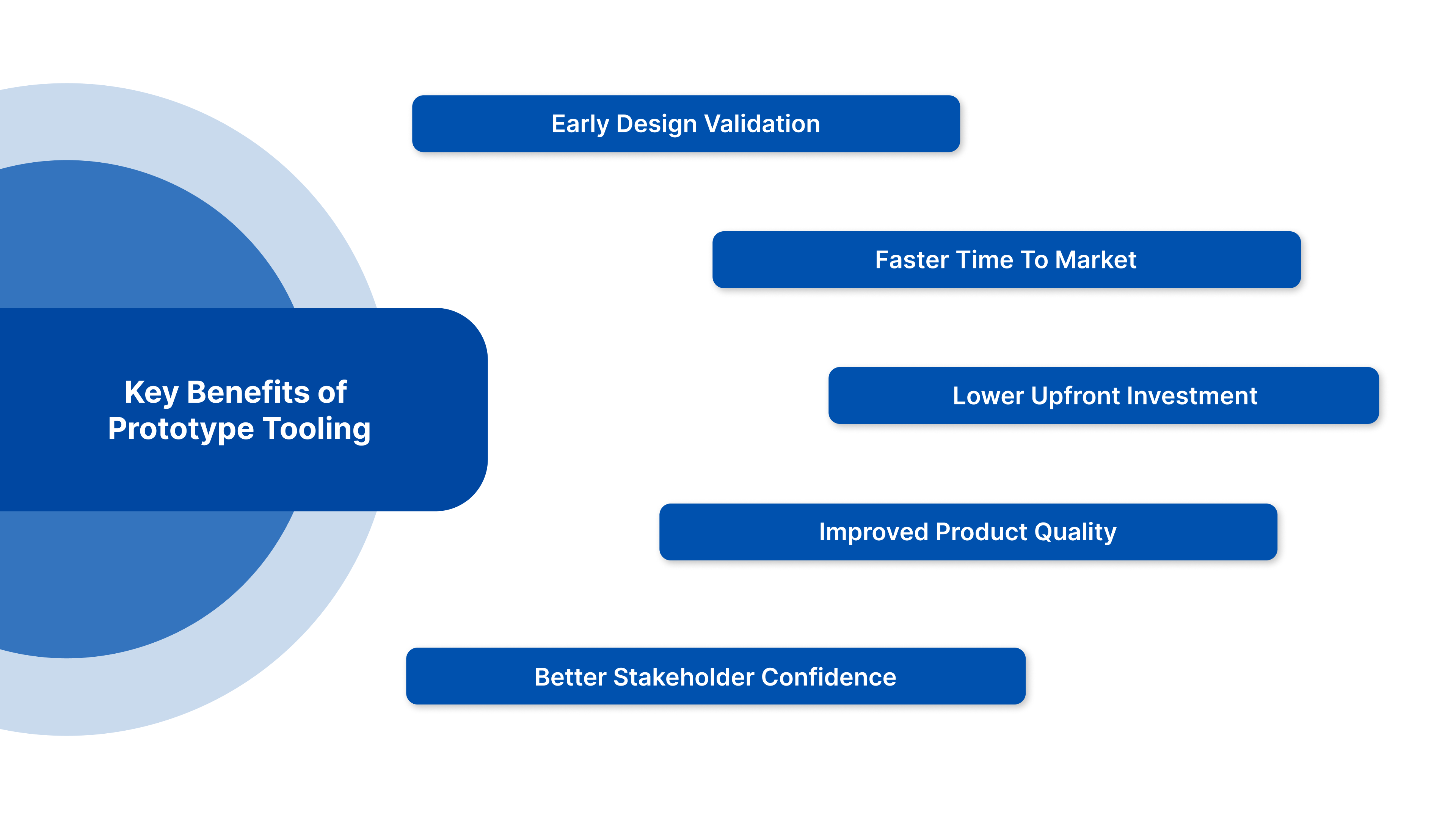
Prototype tooling delivers value where manufacturing risks are highest, before production scaling begins.
Core benefits include:
Early design validation: Engineers identify dimensional errors, tolerance issues, and functional gaps before final tooling.
Faster time to market: Shorter tooling lead times allow quicker testing, iteration, and stakeholder approval.
Lower upfront investment: Prototype tools cost significantly less than hardened production tools, reducing financial exposure.
Improved product quality: Real-world testing highlights performance issues that CAD models often miss.
Better stakeholder confidence: Physical parts simplify decision-making across engineering, procurement, and marketing teams.
But how does the prototype tooling process actually work in practice? Let’s understand next.
Prototype Tooling Process
The prototype tooling process follows a structured but flexible path designed for speed and learning.
Typical process flow:
Design review and manufacturability analysis: Engineers assess part geometry, draft angles, wall thickness, and tolerances.
Tool design and material selection: Aluminum or softer steels are commonly chosen for faster machining and lower cost.
Tool fabrication: CNC machining or hybrid manufacturing creates the prototype mold or fixture.
Prototype production runs: Small batches validate material behavior, surface finish, and repeatability.
Testing and iteration: Feedback informs design tweaks before final production tooling begins.
Each step reduces uncertainty and is used to make the manufacturing process efficient.
Common Tools and Techniques Used in Prototype Tooling
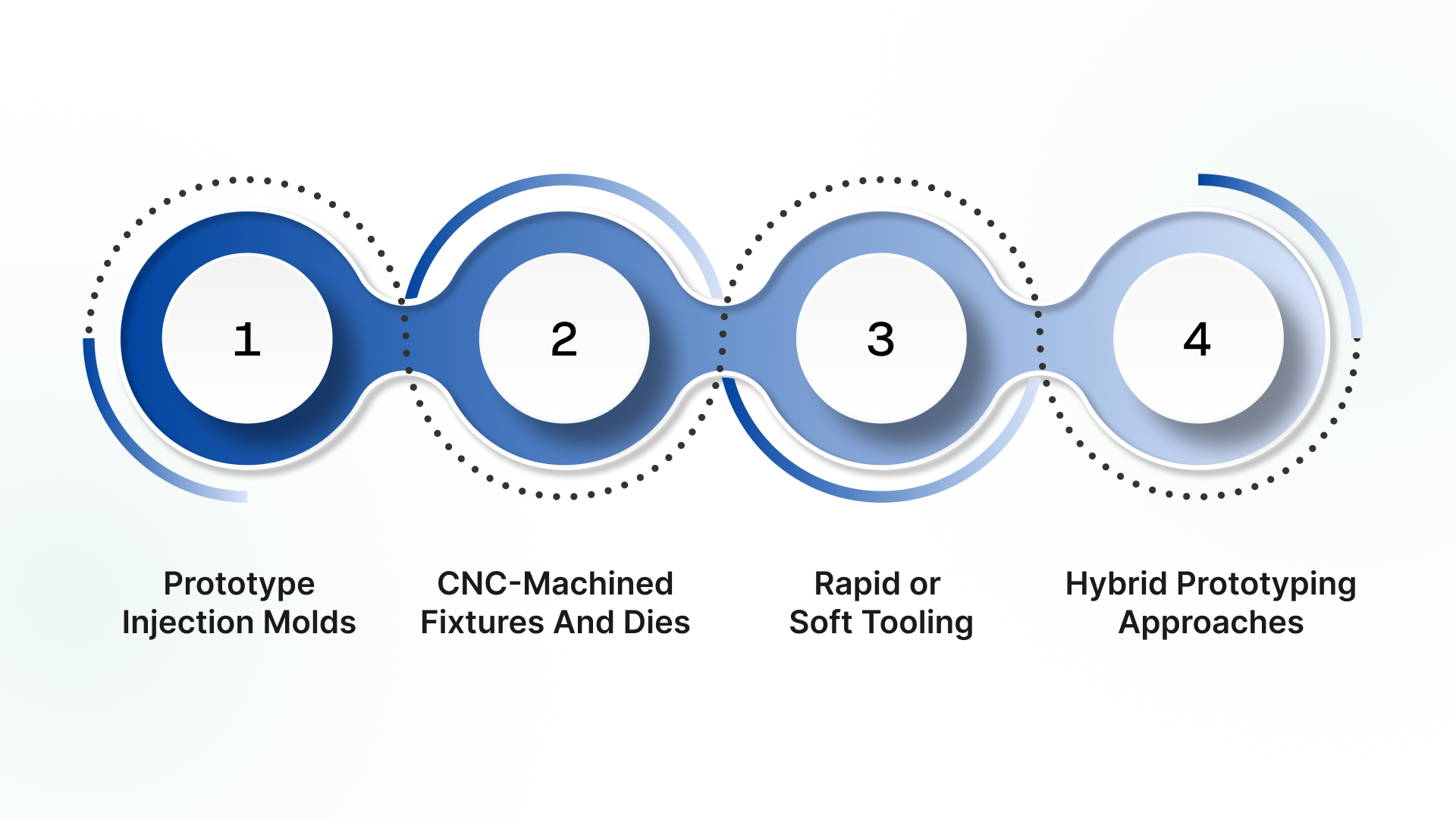
Manufacturers select tooling methods based on part complexity, volume needs, and budget constraints.
Most common techniques include:
Prototype injection molds: Ideal for plastic parts requiring real material testing and consistent repeatability.
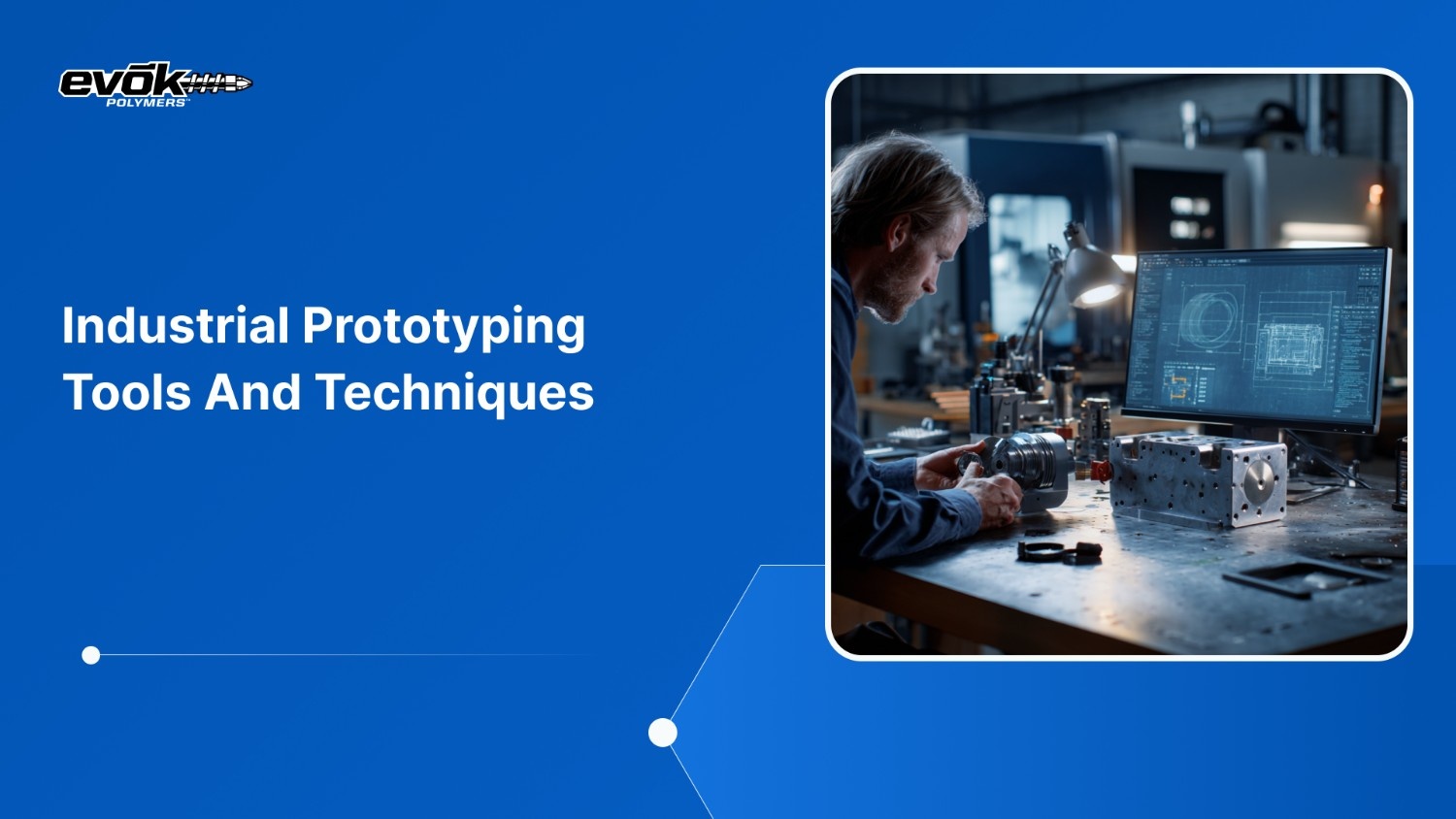
CNC-machined fixtures and dies: Used for metal parts, tight tolerances, and functional testing.
Rapid or soft tooling: Aluminum molds that support quick changes and limited production cycles.
Hybrid prototyping approaches: Combining 3D printing for early validation with tooling for functional testing.
Choosing the right method directly impacts cost control, which makes optimization strategies essential.
Cost Optimization Strategies for Prototype Tooling
Cost optimization in prototype tooling focuses on smart planning rather than cutting corners.
Effective strategies include:
Design for manufacturability (DFM) early: Simplified geometries reduce tooling complexity and machining time.
Limit cavity count initially: Single- or two-cavity tools reduce cost while still validating performance.
Use modular tooling designs: Interchangeable inserts allow design changes without rebuilding the entire tool.
Align batch size with learning goals: Produce only what’s needed to validate function, not excess inventory.
Plan the transition to production tooling: Designing prototypes with scale-up in mind avoids duplicated costs later.
These strategies control spending and reduce manufacturing risk.
How Prototype Tooling Reduces Manufacturing Risk?
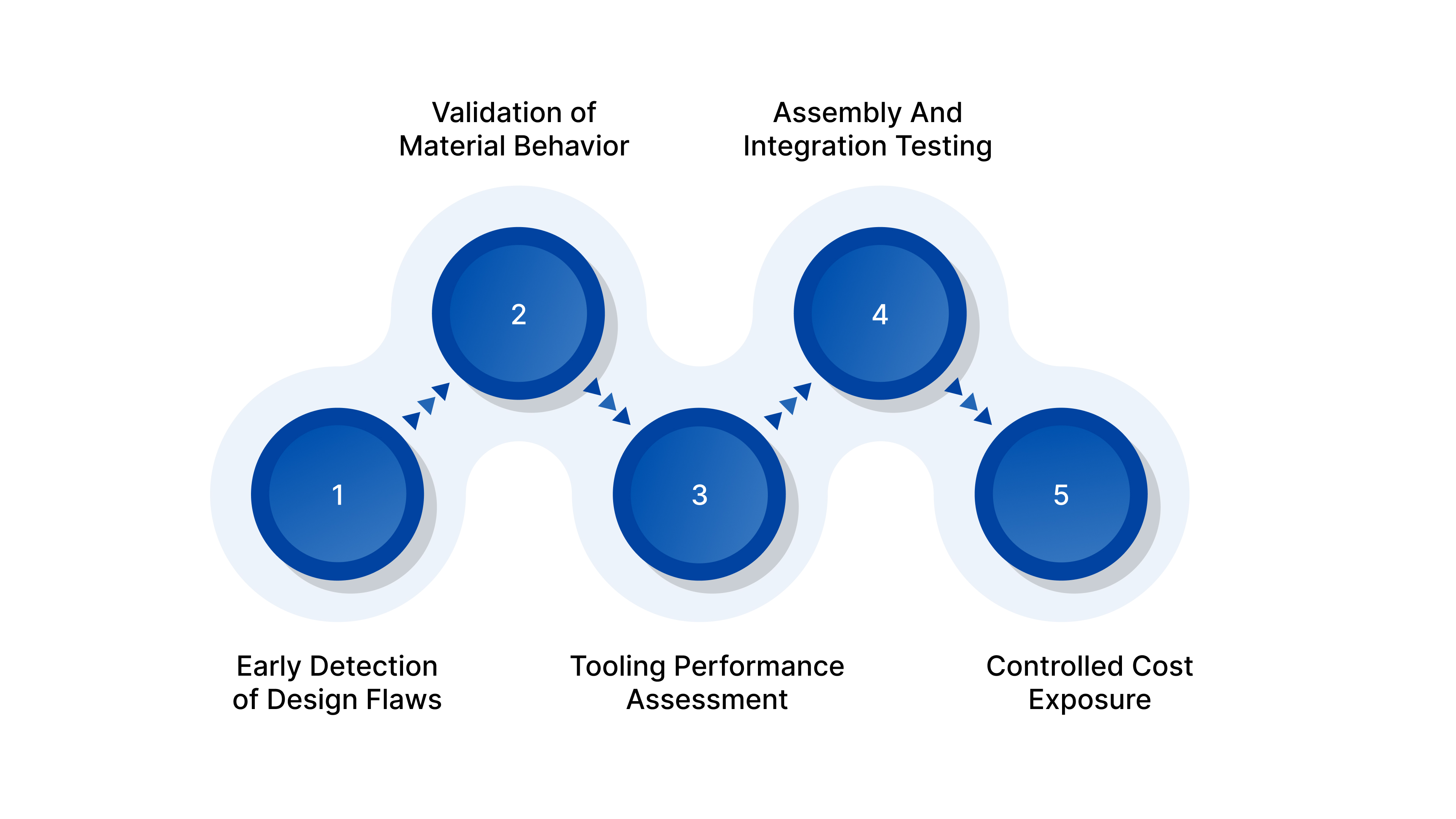
Prototype tooling creates a controlled environment to identify and eliminate production risks before major capital investments.
Key risk-reduction advantages include:
Early detection of design flaws: Physical parts expose tolerance stack-ups, weak features, and fit issues that CAD simulations often miss.
Validation of material behavior: Manufacturers see how materials flow, shrink, warp, or react under real processing conditions.
Tooling performance assessment: Prototype runs reveal wear points, gating inefficiencies, and ejection issues before full-scale tooling is built.
Assembly and integration testing: Teams verify part interaction, fastening methods, and alignment within real assemblies, not assumptions.
Controlled cost exposure: Fixing issues at the prototype stage prevents expensive scrap, rework, and downtime during production ramps.
Why Choose Evok Polymers as Your Prototype Tooling Partner?
At Evok Polymers, we specialize in design-driven, cost-optimized injection molded parts that move confidently from concept to production. From early development through full production, we act as an extension of your engineering team, not just a mold supplier.
Our approach combines design, engineering, quality, and pricing strategy into one tightly connected process. We focus on solving real manufacturing problems while keeping performance, cosmetics, and long-term cost in balance.
We support prototype tooling by:
Design, Engineering and Parts Development: We collaborate early to refine part geometry, optimize performance, and eliminate manufacturability risks before tooling decisions lock in costs.
Material Selection and Application Testing: Our team evaluates material behavior under real conditions to ensure strength, durability, and performance match your application, not just datasheets.
Mold Design and Prototyping: We design molds with production intent, minimizing cycle time and ensuring prototype tooling transitions smoothly into low-cost production tools.
Molding Trials and First Article Approval: Through detailed molding trial reports, we fine-tune gates, vents, wall thickness, and process parameters to achieve 90% production-ready results at T1.
Cost-Focused Production Planning: We itemize and prioritize cost drivers transparently, helping you make informed tradeoffs that protect both part quality and long-term pricing.
Engineers trust Evok Polymers because we solve problems, not just build tools. We combine analytical thinking, upfront cost transparency, and hands-on testing to deliver high-performance injection molded parts, without surprises at scale.
When prototype tooling decisions matter most, we help you get them right the first time.
Conclusion
Prototype tooling gives manufacturers a critical advantage during product development. It validates designs, controls costs, reduces manufacturing risk, and accelerates time to market.
By understanding the tooling process, selecting the right techniques, and applying smart cost optimization strategies, teams avoid expensive downstream mistakes.
From early design decisions to production-ready validation, prototype tooling covers the gap between concept and confidence. If you’re developing a new product or refining an existing one, the right tooling approach can save time, money, and frustration.
Are you planning your next product iteration? Get in touch with Evok Polymers today and close the difference between costly rework and a smooth production launch.
Frequently Asked Questions
1. What is prototype tooling used for?
Prototype tooling is used to create functional parts for testing before full production. It helps validate design, material behavior, fit, and manufacturability under real conditions, allowing engineers to identify issues early and reduce costly changes during large-scale manufacturing.
2. How is prototype tooling different from production tooling?
Prototype tooling focuses on speed, flexibility, and lower upfront cost, while production tooling prioritizes durability and high-volume output. Prototype tools may use simpler designs or materials, but they still produce parts accurate enough to test performance, assembly, and process feasibility.
3. How much does prototype tooling typically cost?
Prototype tooling costs vary based on part complexity, material, and tooling method. In the U.S., costs often range from a few thousand dollars to tens of thousands. However, it is significantly cheaper than production tooling and helps avoid far higher costs from design or process failures.
4. How long does the prototype tooling process take?
The prototype tooling timeline usually ranges from a few weeks to a few months. Factors include part geometry, mold complexity, testing requirements, and iteration cycles. Faster turnaround allows teams to validate designs early and keep product development on schedule.
5. When should a company use prototype tooling?
Companies should use prototype tooling when moving from design to manufacturing, especially before committing to production tooling. It is ideal for validating part performance, testing materials, optimizing mold design, and ensuring the product can be manufactured reliably at scale.