What is bridge tooling in injection molding?
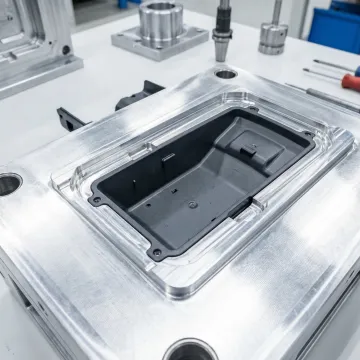
Bridge tooling refers to intermediate-grade molds—typically made from aluminum or soft steel—designed to produce production-quality parts in quantities ranging from 500 to 50,000 units. Unlike prototype tooling, bridge tools use production materials and processes, allowing you to validate designs, test markets, and generate revenue while you refine your product before investing in hardened production tooling. Bridge tools offer faster lead times and lower costs than production molds while delivering significantly higher quality and volume capability than prototype methods.
How long does bridge tooling take compared to production tooling?
Bridge tooling typically requires 4-8 weeks from design approval to first parts, compared to 12-20 weeks for hardened production tooling. The accelerated timeline comes from using softer tool materials like aluminum or P20 steel that machine faster than hardened tool steels. This speed advantage makes bridge tooling ideal for time-sensitive product launches, market testing, or fulfilling initial orders while production tooling is being built.
When should I choose bridge tooling instead of production tooling?
Bridge tooling is optimal when you need production-quality parts quickly, want to validate design and market fit before major capital investment, require design flexibility for potential modifications, have initial volume needs under 50,000 parts, or need to generate revenue while production tooling is being manufactured. It's particularly valuable for new product launches where design refinement based on market feedback is likely, or when reducing financial risk is a priority.
Can bridge tools be modified if design changes are needed?
Yes, one of bridge tooling's key advantages is modification flexibility. Aluminum and soft steel tools are much easier and less expensive to modify than hardened production tools. Changes like adjusting wall thickness, relocating gates, modifying surface textures, or tweaking dimensional tolerances can often be accomplished in days rather than weeks. This flexibility allows you to refine your design based on real-world testing and customer feedback without scrapping expensive tooling.
What's the cost difference between bridge and production tooling?
Bridge tooling typically costs 40-60% less than comparable production tooling, with our competitive pricing as low as $.01 per part detail for production runs. While the per-part cost may be slightly higher than high-volume production, the lower tooling investment, faster time to market, and modification flexibility often result in better overall project economics—especially when you factor in reduced risk and the ability to generate revenue months earlier.
How many parts can I produce from a bridge tool?
Aluminum bridge tools typically deliver 5,000-25,000 quality parts depending on material abrasiveness and part geometry. Soft steel bridge tools (P20) can produce 25,000-50,000 parts before requiring significant maintenance. These volumes are sufficient for market testing, initial production runs, and pre-orders while production tooling is being built. We monitor tool condition through regular inspections and provide advance notice when tool life limits are approaching.
What materials can be used with bridge tooling?
Bridge tools accommodate most thermoplastic resins including ABS, polycarbonate, nylon, polypropylene, polyethylene, and engineering-grade materials like glass-filled nylons or impact-modified resins. Material selection depends on your application requirements, and our material science experts help you choose resins that balance performance, cost, and tool life. We can also run multiple material trials to optimize your material selection before production tooling.
Do you offer design optimization services for bridge tooling projects?
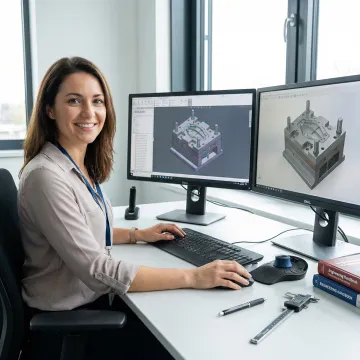
Absolutely. Our engineering team provides comprehensive design review and optimization at $110/hour. We analyze your CAD files for moldability, implement changes to improve part quality and reduce costs, and provide detailed documentation of all modifications. Services include wall thickness optimization, draft angle corrections, gate and vent sizing, tolerance analysis, and mold flow simulation to ensure your bridge tool produces the highest quality parts possible within your timeline and budget.